

Unraveling the Layers: The Enduring Mystery of The Truth About the Harry Quebert Affair

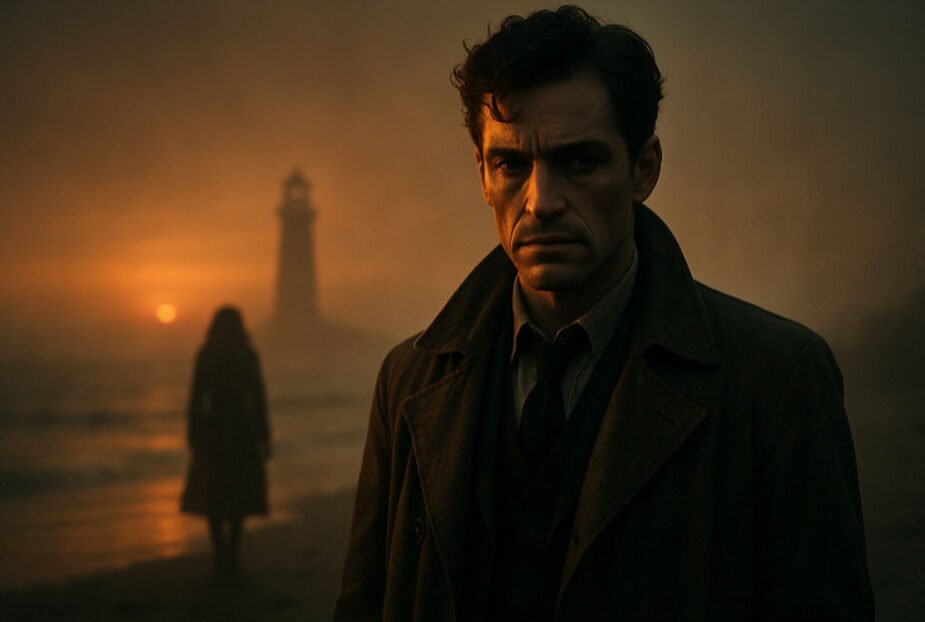
The Enduring Question: What is The Truth About the Harry Quebert Affair?
What if the most celebrated author of a generation was also a murderer?
This is the irresistible hook at the core of Joël Dicker’s global phenomenon, The Truth About the Harry Quebert Affair. The novel is a sprawling, ambitious work that has captivated millions, forcing readers to confront the slippery nature of truth, memory, and narrative itself.
It functions on multiple levels: a gripping murder mystery, a sharp commentary on the publishing world, and a poignant exploration of a forbidden love. The sheer scale of the plot immediately grabs the reader, pulling them into the seemingly quiet town of Aurora, New Hampshire, where nothing is ever quite as it seems.
The Premise: A Summer Romance and a Cold Case
The story kicks off with Marcus Goldman, a young writer paralyzed by the dreaded second-novel syndrome. Desperate for inspiration, he retreats to the home of his mentor, the celebrated literary figure Harry Quebert.
Their reunion is violently interrupted when the remains of fifteen-year-old Nola Kellergan, who vanished in 1975, are unearthed on Harry’s property. Crucially, the original manuscript of Harry’s masterpiece, The Origin of Evil, is found buried alongside her.
Harry is instantly implicated in Nola’s murder. While he denies the killing, he confesses to a passionate, secret affair with the girl that summer. Marcus, convinced of his mentor’s innocence, immediately launches his own investigation to clear Harry’s name.
His mission quickly evolves into more than just solving a cold case; it becomes the subject of his next book, a meta-narrative that cleverly mirrors the very act of the novel we are holding.
The Art of Deception: Dicker’s Narrative Structure
Dicker is a master puppeteer, employing a multi-layered structure that keeps the reader constantly guessing. The story effortlessly shifts between three distinct timelines, each revealing a piece of the puzzle.
We are transported back to the fateful summer of 1975, witnessing the tender, yet deeply inappropriate, relationship between the 34-year-old Harry and the teenage Nola. Simultaneously, we track Marcus’s frantic, modern-day investigation in 2008.
Woven throughout this complexity is a fascinating metafictional thread: Harry’s writing advice to Marcus prefaces each chapter. This technique serves as a constant, winking reminder that the search for truth is, at its heart, a process of crafting a compelling, believable story.
The novel’s substantial length and intricate plotting are not accidental; they are essential to the massive misdirection, ensuring that the reader, much like Marcus, suspects nearly every resident of Aurora at some point.
The Web of Lies: Unmasking the True Killers
The ultimate revelation in The Truth About the Harry Quebert Affair is a truly shocking cascade of twists that recontextualizes everything that came before. The truth, as the title promises, is far more convoluted than a simple crime of passion.
The central mystery of Nola’s death is eventually solved, but only after peeling back layers of small-town secrets, decades-old cover-ups, and profound mistaken identities.
It is revealed that Nola was actually murdered by Chief Gareth Pratt and Travis Dawn. They killed her to silence her after she witnessed them committing their own crime: the murder of Luther Caleb, a young man with a facial disfigurement who was deeply obsessed with Nola.
The true tragedy is that Harry, in a misguided attempt to protect Nola’s memory and the integrity of his own story, allowed himself to be framed for a crime he had no part in.
Themes of Love, Obsession, and the American Dream
Beyond the thrilling whodunit, the novel deeply explores the destructive power of secrets and the complex nature of love. Harry and Nola’s relationship is painted as a pure, if tragically ill-fated, connection, standing in stark contrast to the dark, obsessive love felt by characters like Luther Caleb.
The setting of Aurora, New Hampshire, is more than just a backdrop. It is presented as a microcosm of the idealized American small town, a place of apparent tranquility and summer bliss.
Dicker uses this setting brilliantly to expose the rot beneath the surface, suggesting that the pursuit of the American Dream often conceals profound loneliness, moral compromise, and the painful suppression of uncomfortable truths.
Critical Divide: A Global Phenomenon
The book’s reception was almost as dramatic as its plot. It became a runaway bestseller across Europe, notably winning the prestigious Grand Prix du Roman de l’Académie française.
However, its English-language reception proved to be more polarized. Critics universally praised its relentless pacing and ingenious plotting, acknowledging its success as a masterful page-turning thriller.
Yet, some reviewers took issue with the prose, arguing that the translation lacked subtlety and that the characters often felt like thinly drawn archetypes. Regardless of the critical divide, the novel’s undeniable ability to generate intense discussion and keep readers guessing has cemented its status.
The Legacy of Harry Quebert
The Truth About the Harry Quebert Affair has firmly established itself as a modern literary phenomenon. It is a novel that successfully marries the classic structure of a small-town murder mystery with a contemporary, self-aware commentary on the process of writing itself.
It leaves the reader with a powerful final thought: in the end, the stories we choose to tell ourselves—and the narratives we choose to believe—are often far more influential than the objective truth.
Frequently Asked Questions (FAQ)
Is The Truth About the Harry Quebert Affair a true story?
No, the novel is a complete work of fiction. It was written by the Swiss author Joël Dicker and first published in French in 2012.
Who is the real killer in the book?
The true killers of Nola Kellergan are Chief Gareth Pratt and Travis Dawn. They murdered Nola to silence her after she witnessed them killing Luther Caleb.
What is the main theme of the novel?
The novel explores several major themes, including the nature of forbidden love, the search for objective truth, the process of literary creation, and the corrosive effect of long-held secrets in a seemingly peaceful community.