

Mr. Sympathy Vengeance: An In-Depth Look at Park Chan-wook’s Bleak Masterpiece

Introduction: The Question of Sympathy
When does a quest for justice cross the line into a brutal, self-perpetuating cycle of destruction? And how much **sympathy** can we truly afford the perpetrators of violence, especially when they are also victims?
This is the core, unsettling question posed by Sympathy for Mr. Vengeance, the 2002 South Korean film that launched director Park Chan-wook’s internationally acclaimed “Vengeance Trilogy.” It is a film that refuses to offer easy answers, instead presenting a bleak, unvarnished look at the human cost of retribution.
The Tragic Catalyst: A Desperate Act
The film plunges the viewer into a world of desperation and moral compromise. It centers on Ryu, a deaf-mute factory worker whose life is defined by his ailing sister’s need for a kidney transplant.
Ryu’s Plight and the Black Market
Unable to afford the legitimate procedure, Ryu turns to the black market, offering his own kidney and his life savings in a desperate, ill-conceived exchange. The organ dealers betray him, taking his money and his kidney, leaving him with nothing but despair.
This initial act of exploitation sets the stage for the ensuing tragedy, highlighting the vulnerability of the poor in a system that offers them no safety net.
The Fateful Kidnapping
Driven by his anarchist girlfriend, Yeong-mi, Ryu agrees to kidnap the daughter of his former boss, Park Dong-jin, a wealthy industrialist. The plan is simple: a ransom to pay for his sister’s now-available, but still unaffordable, operation.
However, a moment of negligence leads to the young girl’s accidental drowning, transforming a desperate crime into an irreversible catastrophe. The film suggests that even the most well-intentioned acts can have devastating, unforeseen consequences.
Two Sides of the Same Coin: Ryu and Dong-jin
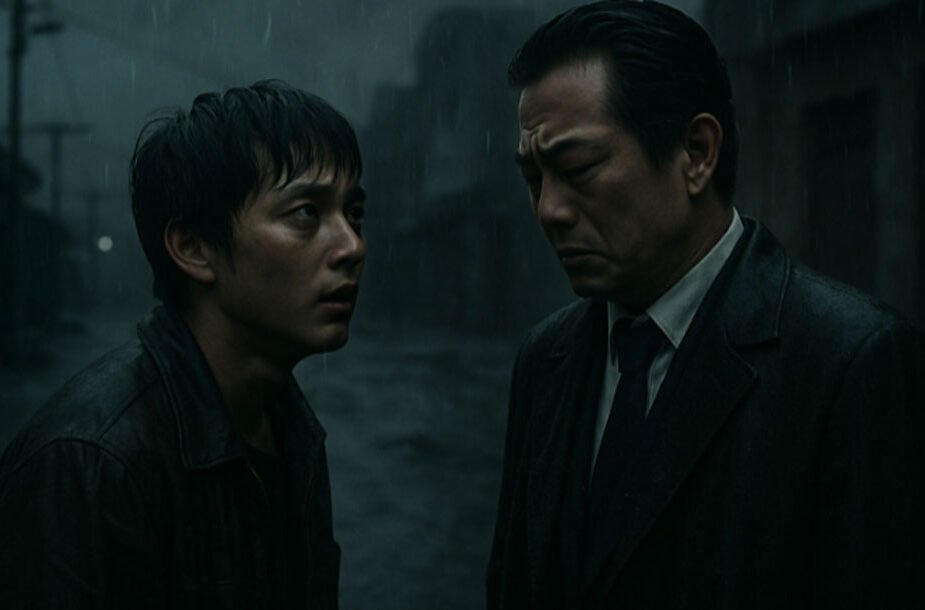
The narrative then splits, forcing the audience to confront the uncomfortable truth that both the hunter and the hunted are men consumed by grief. Dong-jin, the father, is driven by a primal, agonizing need for retribution against the kidnappers.
Ryu, meanwhile, is seeking his own vengeance against the organ dealers who started the chain of events. The film masterfully avoids painting a clear hero or villain. Our **sympathy** is constantly divided, shifting between the two men, each a victim of circumstance and a perpetrator of violence.
The film’s title itself is a cruel irony, asking us to extend compassion to a figure whose actions are inherently destructive. It is a study in moral ambiguity, where every character’s motivation is understandable, yet their actions are unforgivable.
The Inescapable Cycle of Retribution
The film’s brilliance lies in its relentless depiction of how one act of violence inevitably begets another. Every attempt at justice or revenge only deepens the pool of suffering.
From Personal Loss to Endless Violence
The cycle begins with the black market dealers’ betrayal, leading to Ryu’s crime, which triggers Dong-jin’s hunt. Dong-jin’s revenge on Ryu and his girlfriend then provokes a final, brutal act of retribution from Yeong-mi’s anarchist comrades.
The violence is cold, clinical, and devoid of the catharsis typically found in Hollywood revenge thrillers. It serves only to illustrate the futility of the pursuit, leaving a trail of dead bodies and shattered lives.
A Nihilistic Vision: The Futility of Revenge
Ultimately, Sympathy for Mr. Vengeance is a profoundly nihilistic work. It argues that revenge is not a solution, but a poison that consumes the soul and perpetuates misery across social and economic lines.
The film is a stark critique of a society where the desperate are exploited and the wealthy are insulated, yet both are equally susceptible to the destructive power of grief and rage. It is a cinematic punch to the gut, a masterpiece of bleak storytelling that leaves a lasting, uncomfortable impression.
Frequently Asked Questions (FAQ)
Q: Is “Mr. Sympathy Vengeance” the correct title?
A: The official English title of the film is Sympathy for Mr. Vengeance. The phrase “Mr. Sympathy Vengeance” is a common, slightly altered reference used to discuss the film and its central themes of compassion and retribution.
Q: Who is the “Mr. Vengeance” the title refers to?
A: The film deliberately leaves this ambiguous. It could refer to Ryu, the initial seeker of justice against the organ dealers, or Park Dong-jin, the father seeking revenge for his daughter’s death. The title suggests that the ‘Mr. Vengeance’ is not a single person, but the role itself, which anyone can be forced to assume.
Q: What is the Vengeance Trilogy?
A: The Vengeance Trilogy is a thematically linked, but narratively separate, series of three South Korean films directed by Park Chan-wook. It consists of Sympathy for Mr. Vengeance (2002), Oldboy (2003), and Lady Vengeance (2005). Each film explores the themes of revenge, violence, and morality in distinct ways.