

Reginald Gardiner: The Man Who Gave Voice to Wallpaper and Trains

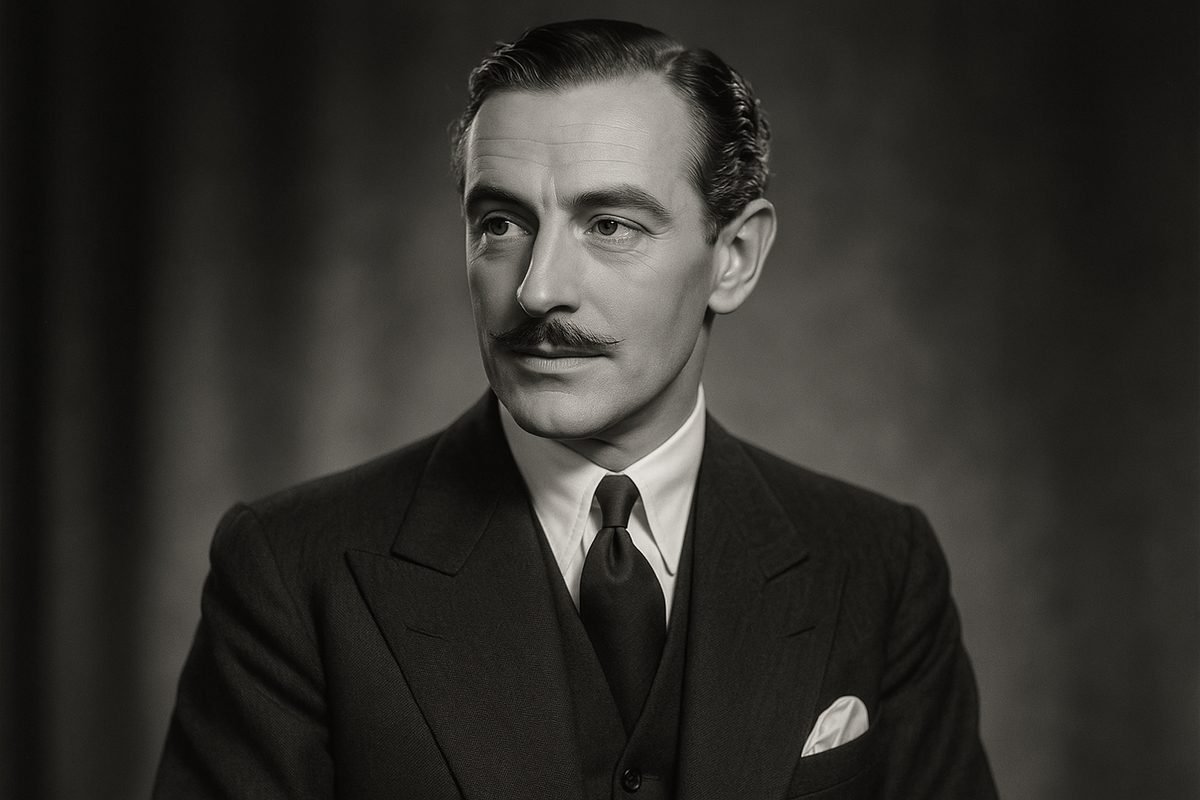
The Unforgettable Charm of Reginald Gardiner
In the glittering world of classic Hollywood, while many stars commanded the spotlight, a select few, like Reginald Gardiner, mastered the art of stealing a scene with quiet, quirky brilliance. This was the man who could make a stuffy English butler feel like your favorite uncle and an inanimate object seem hilariously alive. More than just an actor, Gardiner was a true original.
With his signature pencil-thin moustache and an air of perpetual, dapper confusion, he brought a unique brand of sophisticated comedy to the silver screen. His legacy isn’t just in the roles he played, but in the unforgettable laughter he created by giving a voice to the world in a way no one had ever imagined.
From Wimbledon to the West End
Born William Reginald Gardiner in Wimbledon, England, on February 27, 1903, his path wasn’t initially set for the stage. His parents envisioned a future for him as an architect, a respectable and stable profession. But the lure of the theatre was too strong, leading him to the prestigious Royal Academy of Dramatic Art to chase his true calling.
A Star is Born on the London Stage
Gardiner didn’t become a star overnight. He started from the ground up, taking on small parts before his natural comedic timing and undeniable charisma earned him headlining roles in London’s bustling West End. Throughout the 1930s, he became a beloved figure in British revues and plays.
It was here that he honed his craft, developing a unique style of physical comedy and mimicry that would soon become his ticket to international fame.
Conquering Broadway
In 1935, encouraged by the celebrated actress Beatrice Lillie, Gardiner set sail for America. He arrived on Broadway and took it by storm. Audiences were utterly charmed by his eccentric acts, most famously his uncanny impersonation of… wallpaper. Yes, wallpaper.
In hit shows like “At Home Abroad,” he would leave audiences in stitches with his bizarrely brilliant imitations of everything from lighthouses to trains, proving that comedy could be found in the most unexpected places.
Hollywood’s Favorite Englishman
Hollywood, always on the lookout for fresh talent, quickly came calling. After his Broadway triumphs, Gardiner transitioned seamlessly to film, where he carved out a very specific and enduring niche for himself.
Crafting a Niche
Have you ever seen a movie with a comically flustered, upper-crust Englishman? Or a butler who is far more interesting than the people he serves? Chances are, you’ve seen a character inspired by, if not played by, Reginald Gardiner. He became the master of these roles, playing them not as simple caricatures, but with a delightful, self-aware wink.
His on-screen persona was a masterful blend of high-society polish and a kind of wide-eyed, gentle absurdity that made him instantly lovable.
Unforgettable Film Moments
Gardiner’s filmography reads like a who’s who of Hollywood’s golden age. He appeared in nearly 100 films, often alongside the era’s biggest stars. From the slapstick chaos of the Laurel and Hardy comedy “The Flying Deuces” to the cozy charm of the holiday classic “Christmas in Connecticut,” Gardiner always left an impression.
Perhaps his most enduring roles are as the conflicted Commander Schultz in Charlie Chaplin’s masterpiece “The Great Dictator,” and his pitch-perfect, satirical take on Noël Coward in “The Man Who Came to Dinner.”
The Genius of Imitation
What truly set Reginald Gardiner apart, however, was his extraordinary talent for mimicry. This wasn’t about impersonating other actors; it was about capturing the very soul of the mechanical world.
The Legendary “Trains” Monologue
His most iconic performance piece was a simple monologue called “Trains.” In it, Gardiner would use nothing but his voice to conjure the entire world of a steam locomotive. He became the engine, the whistle, the rhythmic clatter of the wheels on the tracks—a sound he famously immortalized as “diddly-dee, diddly-dum.”
This unique act was so beloved that it earned him a private performance for King George VI at Buckingham Palace. The recording became a massive hit and remains a cherished piece of comedic history.
A Legacy Beyond the Screen
Reginald Gardiner’s career was long and varied, spanning stage, radio, and television, where he remained a popular guest star for decades. He passed away on July 7, 1980, leaving behind a body of work that continues to delight audiences today.
The Man Behind the Moustache
Off-screen, Gardiner was a family man, married twice and a devoted father. He managed to keep his private life largely out of the Hollywood gossip columns, preferring a quiet existence away from the glare of the spotlight.
An Enduring Legacy
So, what is the legacy of Reginald Gardiner? It is one of pure, unadulterated joy. He was a character actor who elevated every film he was in, an artist who found comedy in the mundane, and a performer who proved that you don’t need to be the leading man to be a legend.