

Baker v. Carr: The Landmark Case That Redefined American Democracy

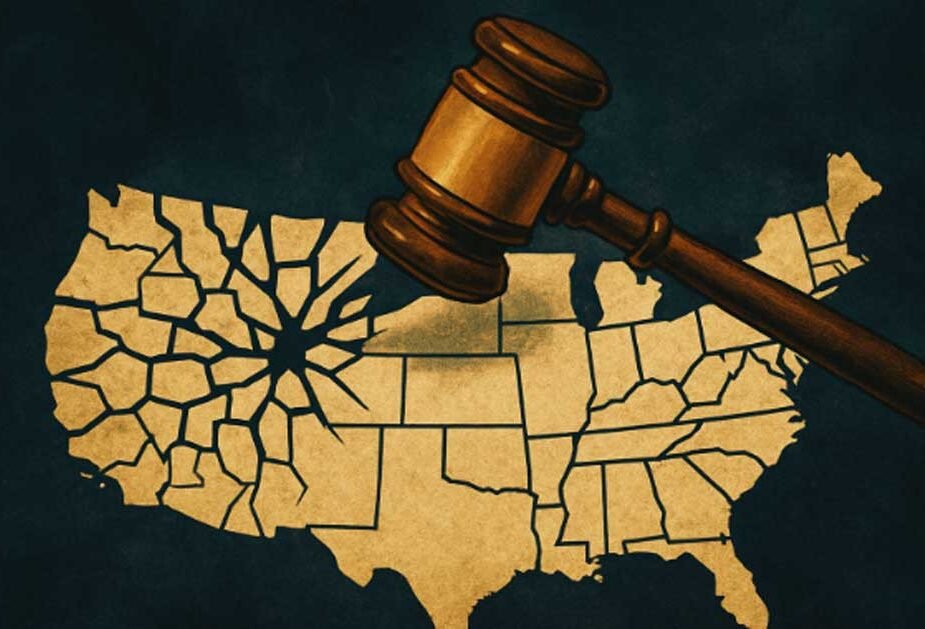
Is your vote truly equal to your neighbor’s? For decades in the United States, the answer was a resounding no, especially for urban dwellers.
The landmark 1962 Supreme Court decision, Baker v. Carr, fundamentally challenged this inequality, opening the door for federal courts to intervene in the politically charged issue of legislative apportionment. This case didn’t just change how districts were drawn; it reshaped the very landscape of American democracy.
The Unjust Status Quo: Why Baker v. Carr Was Necessary
For over sixty years, the state of Tennessee had failed to redraw its legislative districts, clinging to a 1901 apportionment scheme. This inaction meant that the population shifts from rural to urban areas were completely ignored.
As a result, a vote cast in a sparsely populated rural district carried significantly more weight than a vote cast in a densely populated city like Memphis or Nashville. This disparity created a system where a minority of the state’s population could elect a majority of the state legislature.
This imbalance was not unique to Tennessee; it was a widespread issue across many states, leading to what critics called “rotten boroughs” and a systematic disenfranchisement of urban voters. The legislative branch, which had the power to fix the problem, had a vested interest in maintaining the status quo.
A System of Inequality in Tennessee
The core of the problem lay in the state legislature’s refusal to act. They were essentially self-perpetuating a system that favored their rural base, making any legislative solution impossible.
The only remaining avenue for change was the judicial system, but a long-standing precedent prevented federal courts from hearing such cases, deeming them “political questions.”
The Legal Challenge: Who Were Baker and Carr?
Charles W. Baker, a Republican from Tennessee, and other qualified voters filed a lawsuit against Joe Carr, the Secretary of State for Tennessee. Their claim was straightforward: the state’s failure to reapportion violated the Equal Protection Clause of the Fourteenth Amendment.
They argued that the severe population differences between districts meant they were being denied the equal protection of the laws. Their votes were effectively diluted, rendering them less valuable than those of rural voters.
The Plaintiffs’ Argument: A Violation of Equal Protection
The plaintiffs were asking the federal judiciary to step into an area traditionally reserved for the political branches. They contended that the issue was not a political one, but a constitutional one concerning fundamental rights.
The legal challenge hinged on whether the federal courts had the jurisdiction to hear a case about legislative apportionment. If the courts refused, the voters had no remedy for the constitutional violation they faced.
The Core Question: Justiciable or Political?
The central legal hurdle for the Supreme Court was the “political question” doctrine. This doctrine suggests that certain matters are so inherently political that they should be resolved by the legislative or executive branches, not the judiciary.
Previous Supreme Court rulings, notably Colegrove v. Green (1946), had upheld this hands-off approach, stating that the courts should not enter the “political thicket” of apportionment.
The “Political Question” Doctrine
The doctrine, as applied to this case, meant that the Court had to decide if the claim was truly about a political dispute or a violation of individual constitutional rights. The Court’s decision would either maintain the status quo or dramatically expand the scope of judicial power.
The dissenting justices argued that the Court was overstepping its bounds and interfering with the separation of powers. They believed the issue was non-justiciable and should remain in the political arena.
The Supreme Court’s Decision: Opening the Courthouse Doors
In a 6-2 decision, the Supreme Court ruled in favor of Baker. Writing for the majority, Justice William J. Brennan Jr. delivered the opinion that legislative apportionment was indeed a justiciable issue under the Equal Protection Clause.
The Court did not rule on the merits of the Tennessee plan itself. Instead, it established that the federal courts had the jurisdiction to hear cases challenging malapportionment.
Justice Brennan’s Majority Opinion
Justice Brennan carefully distinguished the case from previous rulings, arguing that the plaintiffs were not asking the Court to decide a political question, but to enforce a constitutional right.
He stated that the claim was a “justiciable constitutional cause of action” and that the Equal Protection Clause provided a clear standard for judicial review. This ruling effectively dismantled the “political question” barrier in apportionment cases.
The Immediate Aftermath and the “One Person, One Vote” Principle
The Baker v. Carr decision did not immediately establish a remedy, but it paved the way for a series of subsequent cases that did. The most significant of these was Reynolds v. Sims (1964).
In Reynolds, the Court applied the principle established in Baker to state legislative districts, firmly establishing the “one person, one vote” principle. This principle mandated that all districts must be substantially equal in population.
The Legacy of Reynolds v. Sims
The “one person, one vote” rule was the practical consequence of Baker v. Carr. It forced states across the nation to redraw their legislative maps, shifting political power from rural areas to urban and suburban centers.
This massive redistricting effort fundamentally altered the composition of state legislatures and the U.S. House of Representatives, making the political system more representative of the actual population distribution.
Lasting Impact: The Enduring Power of Judicial Review
The impact of Baker v. Carr extends far beyond redistricting. It is a foundational case in American constitutional law, marking a significant expansion of the federal judiciary’s role in protecting individual rights.
By asserting its authority to review legislative apportionment, the Supreme Court ensured that the Equal Protection Clause could be used to challenge structural inequalities in the political process. It remains a powerful precedent for judicial intervention in matters of democracy and representation.
Frequently Asked Questions (FAQ)
What was the main issue in Baker v. Carr?
The central issue was whether federal courts had the authority to hear cases challenging the drawing of legislative district boundaries (redistricting), which had previously been considered a non-justiciable “political question.”
When was the Baker v. Carr decision handed down?
The U.S. Supreme Court handed down its decision in Baker v. Carr on March 26, 1962.
What is the “political question” doctrine?
The “political question” doctrine is a principle that holds that certain issues are exclusively within the jurisdiction of the executive or legislative branches of government and are therefore inappropriate for judicial review.
What is the “one person, one vote” principle?
The “one person, one vote” principle, established in the wake of Baker v. Carr and solidified in Reynolds v. Sims (1964), mandates that all legislative districts must be roughly equal in population, ensuring that each person’s vote carries approximately the same weight.