

Unveiling the Mysterious Melia Azedarach: Nature’s Multifaceted Wonder

Introduction: What on Earth is Melia Azedarach?
Have you ever strolled through a park or a countryside path and been captivated by a tree with delicate, fragrant blossoms and a unique appearance? Chances are, you might have encountered Melia Azedarach, commonly known as the Chinaberry tree or the Pride of India. But what exactly makes this tree so special?
Melia Azedarach is a medium – sized deciduous tree that belongs to the Meliaceae family. Native to Asia, it has now spread to various parts of the world, including Africa, Australia, and the Americas. Standing at a height of up to 20 meters, it commands attention with its distinct features.Botanical
Basics: Anatomy of Melia Azedarach
To truly appreciate Melia Azedarach, we must first explore its botanical characteristics. From its stately trunk to its delicate blossoms, every part of this tree tells a story of nature’s artistry.
A Tree of Distinctive Appearance
Melia Azedarach is a sight to behold. It can reach heights of up to 20 meters, with a straight, sturdy trunk that serves as the tree’s anchor. The bark is a deep, rich brown, often marked with fine grooves and fissures, adding to its rustic charm. As it matures, the tree develops a broad, rounded canopy that provides ample shade, making it a popular choice for parks and gardens.
The Alluring Leaves
The leaves of Melia Azedarach are a study in elegance. They are pinnately compound, meaning they are arranged in a feather – like pattern along the stem. Each leaflet is lance – shaped, with a pointed tip and a smooth, slightly serrated edge. The leaves are a vibrant green, and in the fall, they transform into a warm palette of yellows and oranges before gracefully falling to the ground.
The Enchanting Blossoms
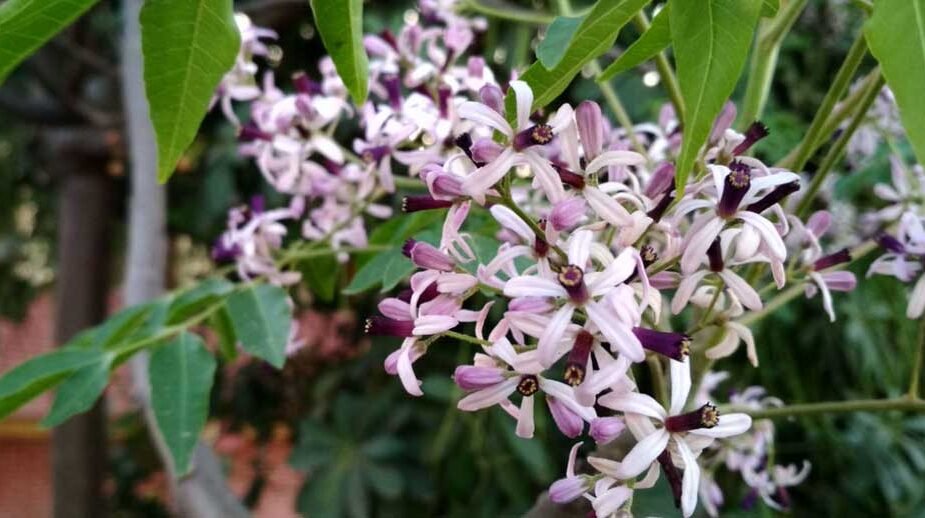
Come spring, Melia Azedarach bursts into a profusion of blossoms. The flowers are small, about 1 – 2 centimeters in diameter, but their beauty lies in their mass display. They are a soft, lilac – purple color, with five delicate petals that form a star – like shape. The blossoms are arranged in long, drooping clusters, filling the air with a sweet, honey – like fragrance that attracts bees and butterflies.
The Peculiar Fruits
As the flowers fade, they give way to the tree’s unique fruits. The fruits of Melia Azedarach are small, round berries, about 1 – 2 centimeters in diameter. When young, they are a bright green, gradually turning yellow and then a deep, golden – brown as they ripen. These fruits are not only a visual delight but also play an important role in the tree’s life cycle, serving as a source of food for various wildlife.
Geographical Trails: Where Melia Azedarach Thrives
The journey of Melia Azedarach across the globe is as fascinating as the tree itself. From its native habitats to the regions where it has been introduced, this tree has left its mark on diverse landscapes.
Native Habitats
Melia Azedarach is native to a vast expanse of Asia. In China, it can be found in abundance, gracing the landscapes from the northern provinces down to the southern regions. Its presence is also prominent in India, where it has been an integral part of the ecosystem for centuries. These areas provide the ideal climate and soil conditions for the tree to thrive, with warm temperatures, adequate rainfall, and a variety of soil types, from loamy to sandy, that can support its growth.
Expanding Horizons: Cultivation Spots
Over time, Melia Azedarach has been introduced to other parts of the world. In Africa, it has found a new home in countries like South Africa and Nigeria. The warm climate and the fertile soils of these regions have allowed the tree to adapt and grow. In Australia, it has been cultivated in the southern and eastern parts, adding a touch of the exotic to the Australian landscapes. Even in the Americas, particularly in the southern United States, Melia Azedarach has been planted in gardens and parks, bringing its unique beauty to a new continent.
Ecological Significance: Melia Azedarach in the Ecosystem
Beyond its aesthetic appeal, Melia Azedarach plays a crucial role in the ecosystem. It contributes to environmental health in multiple ways, from purifying the air we breathe to providing a haven for wildlife.
An Air – Purifying Powerhouse
Melia Azedarach is like a natural air filter. Its leaves are covered in tiny pores called stomata. These stomata absorb harmful pollutants from the air, such as sulfur dioxide, nitrogen oxides, and particulate matter. Through the process of photosynthesis, the tree uses these pollutants as raw materials, converting them into oxygen and other organic compounds. This not only improves air quality but also helps in reducing the impact of air pollution on human health and the environment. In urban areas, where air pollution is a major concern, Melia Azedarach can act as a green shield, making the air cleaner and fresher.
A Haven for Wildlife
The tree is a veritable paradise for wildlife. Its fruits are a rich source of food for various birds. Species like the cedar waxwing, robin, and starling are often seen feasting on the berries of Melia Azedarach. The dense canopy of the tree provides shelter and nesting sites for birds, protecting them from predators and the elements. Small mammals such as squirrels also find refuge in the tree, using its branches and hollows for shelter. Additionally, the nectar – rich blossoms attract bees, butterflies, and other pollinators, playing a vital role in the pollination process and supporting the biodiversity of the area.
Human – Tree Bond: Utilitarian and Symbolic Roles
The relationship between Melia Azedarach and humans is as deep – rooted as the tree’s own roots. It has been intertwined with human life in many ways, both practically and symbolically.
Medicinal Marvels
For centuries, Melia Azedarach has been a staple in traditional medicine. The bark, leaves, and fruits of the tree are rich in compounds with medicinal properties. The bark contains alkaloids and triterpenoids that have been used to treat skin diseases, such as eczema and ringworm. A decoction made from the bark can be applied topically to soothe irritated skin. The leaves, on the other hand, are known for their insect – repellent properties. They can be crushed and rubbed on the skin to keep mosquitoes and other pests at bay. In traditional Chinese medicine, the fruits of Melia Azedarach, also known as Chinaberry fruits, are used to treat a variety of ailments, including intestinal worms, abdominal pain, and hernia. However, it’s important to note that the tree is toxic if ingested in large quantities, and any use of it for medicinal purposes should be under the guidance of a qualified healthcare professional.
Cultural Connotations
Melia Azedarach holds significant cultural symbolism in many societies. In some Asian cultures, the tree is associated with good luck and prosperity. It is often planted near homes and temples, believed to bring positive energy and ward off evil spirits. The lilac – purple blossoms of the tree are seen as a symbol of love and beauty. In literature and poetry, Melia Azedarach is often used as a metaphor for grace and elegance. In Indian culture, the tree is considered sacred and is sometimes referred to as the “Tree of the Gods.” It is used in religious ceremonies and is believed to have spiritual powers. These cultural associations have not only made the tree a part of the cultural heritage but have also contributed to its conservation and cultivation over the years.
Cultivation Corner: Growing Your Own Melia Azedarach
If you’re enchanted by the beauty and benefits of Melia Azedarach and want to add one to your garden, here’s a guide to help you get started. From preparing the soil to choosing the right propagation method, growing your own Melia Azedarach can be a rewarding experience.
Ideal Growing Conditions
Melia Azedarach is a relatively adaptable tree when it comes to soil. It can thrive in a variety of soil types, including acidic, neutral, and slightly alkaline soils. However, for the best growth, it prefers well – drained, fertile soil. A loamy soil that is rich in organic matter is ideal as it provides good drainage while retaining enough moisture and nutrients for the tree.
In terms of sunlight, Melia Azedarach is a sun – loving tree. It requires full sun to partial shade. In full sun, the tree will produce more flowers and fruits, and its growth will be more robust. When planted in a location with at least 6 hours of direct sunlight per day, it can reach its full potential in terms of size and beauty. However, it can also tolerate some shade, especially in the afternoon, which can be beneficial in extremely hot climates.
Propagation Methods
One of the most common ways to propagate Melia Azedarach is through seeds. The seeds can be collected from the mature fruits of the tree. After collecting the fruits, soak them in water for a few days to soften the outer pulp. Then, remove the pulp to reveal the seeds. The seeds can be sown directly in the ground in the spring or fall. Before sowing, it’s a good idea to scarify the seeds by nicking the outer shell slightly. This helps to speed up germination. Sow the seeds about 1 – 2 centimeters deep in the soil and keep the soil moist until germination, which usually takes about 2 – 3 weeks.
Another method of propagation is through cuttings. Take semi – hardwood cuttings in the summer. The cuttings should be about 10 – 15 centimeters long and should be taken from healthy, disease – free branches. Remove the lower leaves from the cutting, leaving only a few at the top. Dip the cut end in a rooting hormone powder to encourage root growth. Then, plant the cutting in a pot filled with a well – draining potting mix. Keep the pot in a warm, bright location, but out of direct sunlight. Keep the soil moist, and roots should start to develop in about 4 – 6 weeks. Once the roots are well – established, the new plant can be transplanted into the garden.
FAQ
What are the common names of Melia Azedarach?
Melia Azedarach is commonly known as the Chinaberry tree, Pride of India, bead tree, and Persian lilac. These names have been used in different regions and cultures, each adding a unique touch to the tree’s identity.
Is Melia Azedarach poisonous?
Yes, Melia Azedarach is poisonous. All parts of the tree, including the bark, leaves, flowers, and fruits, contain toxic compounds such as meliatoxins. Ingestion can lead to symptoms like nausea, vomiting, abdominal pain, and in severe cases, it can be life – threatening. Keep children and pets away from the tree to prevent accidental poisoning.
How can I tell if my Melia Azedarach tree is healthy?
A healthy Melia Azedarach tree has vibrant green leaves without discoloration or spots. The bark should be smooth and free from cracks, cankers, or peeling. The tree should have a strong, upright trunk and a well – formed canopy with even growth. If you notice wilting leaves, yellowing foliage, or a lack of new growth, it could be a sign of a problem, such as a pest infestation or a nutrient deficiency.