

Oskar Werner: The Unforgettable Rebel of the Silver Screen

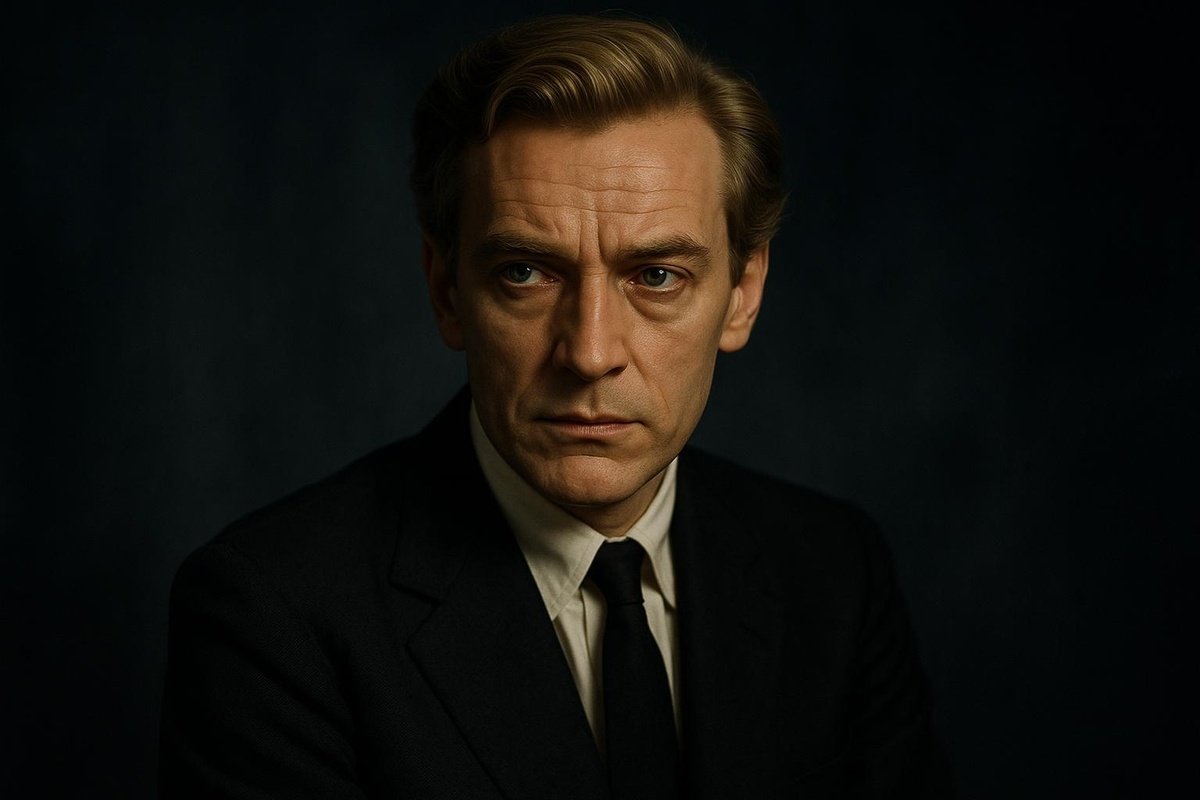
The Enigmatic Oskar Werner: A Life of Art, War, and Turmoil
Oskar Werner was a man of contradictions: a celebrated actor who disdained the spotlight, a pacifist forced into a war he despised, and a sensitive artist whose inner demons ultimately consumed him. His intense performances and rebellious spirit left an indelible mark on both stage and screen, cementing his status as one of the most compelling and enigmatic figures in cinematic history.
From Poverty to the Prestigious Stage
Born Oskar Josef Bschließmayer in 1922, Werner’s early life in Vienna was marked by extreme poverty. Raised in a one-room apartment by his grandmother after his parents’ separation, he found an escape in the world of theater.
This passion led him to the prestigious Burgtheater, where, at just 18, he became its youngest member, adopting the stage name that would become legendary.
A Pacifist’s Defiance in a Time of War
Werner’s burgeoning career was interrupted by World War II. A staunch pacifist who loathed the Nazi regime, he was drafted into the Wehrmacht.
He deliberately feigned incompetence to avoid service on the front lines and, in a courageous act of defiance, deserted the army in 1944. He spent the remainder of the war in hiding with his half-Jewish wife, Elisabeth Kallina, and their infant daughter, surviving in the Vienna Woods.
The Reluctant Star’s International Breakthrough
After the war, Werner returned to the stage, but it was his role in the 1951 American film Decision Before Dawn that brought him international attention. Despite this success, he remained wary of Hollywood, viewing the studio system as a creative straitjacket.
He preferred the artistic freedom of the European stage, where he delivered a now-legendary performance as Hamlet.
Hollywood’s Golden Cage: Awards and Disillusionment
Werner’s undeniable talent eventually drew him back to Hollywood. His roles in Ship of Fools (1965) and The Spy Who Came in from the Cold (1965) earned him an Academy Award nomination and a Golden Globe Award, respectively.
Yet, even as he was celebrated by critics and audiences, his disillusionment with the film industry grew, and he became known for his selective and often difficult nature.
The Rebel with a Cause: Artistic Integrity Over Fame
For Werner, artistic integrity was paramount. He famously clashed with director François Truffaut during the filming of Fahrenheit 451 (1966), a dispute that fractured their friendship and solidified Werner’s reputation as a rebel.
He was an actor who refused to compromise his vision, a trait that both defined his brilliance and limited his career.
The Final Act: A Slow Fade from the Spotlight
In his later years, Werner retreated from the film world, dedicating his time to stage performances and poetry recitals. His struggle with alcoholism intensified, leading to a decline in his health and a growing reclusiveness.
He made his final film appearance in Voyage of the Damned (1976), a poignant end to a tumultuous career.
The Enduring Legacy of a Troubled Genius
Oskar Werner died of a heart attack in 1984 at the age of 61, leaving behind a legacy as complex as the man himself. He was a troubled genius, an unforgettable rebel who graced the silver screen with a rare and captivating intensity.
His work continues to resonate with audiences, a timeless reminder of a singular talent who dared to be different.