

The Midnight Mystery: Unlocking the Secrets of the Queen of the Night Cactus

Introduction
Have you ever wondered about a flower so magnificent, so rare, that it only graces the world with its presence for a single, fleeting night?
This is the captivating reality of the Queen of the Night Cactus, a plant shrouded in mystery and celebrated by gardeners across the globe.
Known scientifically as Epiphyllum oxypetalum, this unique species offers a truly unforgettable spectacle that few are lucky enough to witness.
Its brief, nocturnal bloom is a botanical event that defines its regal title and makes it a treasured addition to any collection.
The Botanical Identity: More Than Just a Cactus
The name “cactus” often conjures images of arid deserts and sharp spines, but the Queen of the Night defies this stereotype.
It is, in fact, an “orchid cactus,” a term that hints at its true nature as an epiphytic plant.
Epiphytic Nature
Unlike its terrestrial cousins, the Queen of the Night Cactus naturally grows on other plants, such as trees, in its native tropical forests of Central and South America.
It does not draw nutrients from its host, but rather uses the tree for support, gathering moisture and food from the air and rain.
This tropical heritage is key to understanding its specific care requirements, which are very different from desert cacti.
Physical Appearance
The plant itself is not traditionally beautiful during the day. It features long, flat, leaf-like stems, technically called cladodes, that can grow quite gangly and sprawling.
These stems are spineless and have a vibrant green color, often trailing or hanging from their support.
Its daytime appearance gives little indication of the stunning transformation that awaits it after sunset.
The Midnight Marvel: Unveiling the Nocturnal Bloom
The true fame of the Queen of the Night Cactus lies in its spectacular, yet heartbreakingly brief, flowering ritual.
The Flower
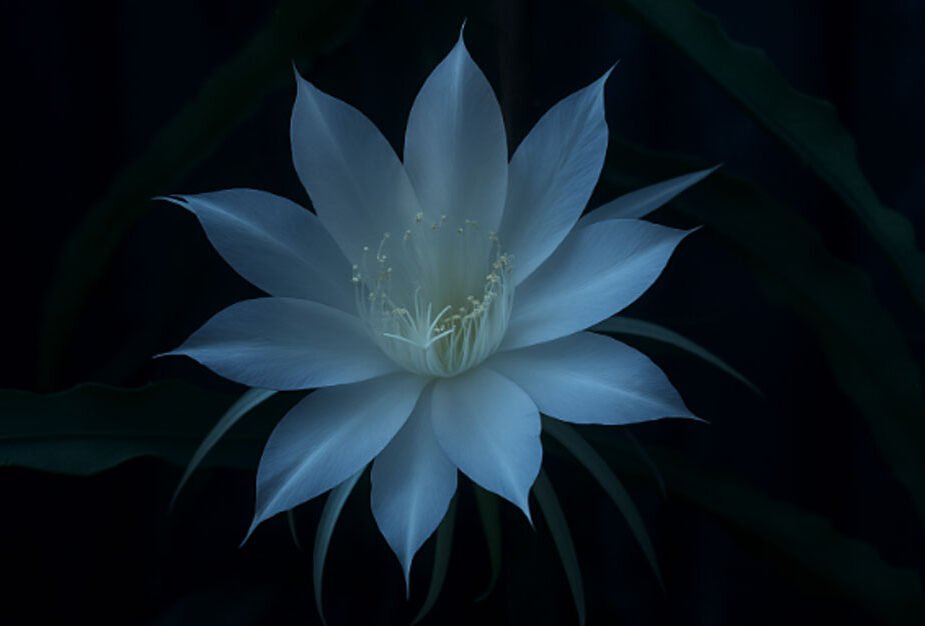
The blooms are enormous, often reaching up to 10 inches in diameter, with multiple layers of pure white petals and a creamy yellow center.
What truly sets them apart is their intense, sweet, and intoxicating fragrance, which can fill an entire house or garden.
The Timing
The flower buds begin to unfurl slowly as the sun sets, reaching their peak of perfection around midnight.
By the first light of dawn, the magnificent flower has already begun to wilt, its beauty gone until the next season.
This single-night event is what makes the plant a symbol of fleeting beauty and a cause for celebration among its owners.
Pollination
The nocturnal timing of the bloom is an evolutionary adaptation designed to attract its natural pollinators.
In the wild, the Queen of the Night relies on night-flying creatures, primarily large moths and bats, to carry its pollen.
The powerful fragrance and bright white color are signals that cut through the darkness, guiding these essential visitors to the flower.
Essential Care for the Queen
Caring for this royal plant is straightforward once you understand its tropical, rather than desert, needs.
Light Requirements
The Queen of the Night Cactus thrives in bright, indirect light. A spot near an east or west-facing window is often ideal.
It must be protected from the harsh, direct midday sun, which can scorch its delicate, flat stems.
Too little light, however, will prevent it from producing the precious flower buds.
Watering Schedule
As an epiphytic plant, it appreciates more water than a typical desert cactus. Water the plant thoroughly when the top inch of soil feels dry to the touch.
During the winter months, when the plant is resting, you should significantly reduce watering to allow for a period of dormancy.
Soil and Feeding
A well-draining, rich potting mix is essential. Many growers use a blend designed for orchids or a standard potting mix amended with perlite and compost.
Fertilize regularly during the spring and summer growing season with a balanced, diluted liquid fertilizer to support its vigorous growth.
Unlocking the Bloom: Secrets to Success
Getting your Queen of the Night Cactus to bloom is the ultimate reward, and it often requires a bit of gentle manipulation.
The Importance of Light Cycles
To initiate flowering, the plant needs a period of long, uninterrupted darkness each night, especially in the late winter and early spring.
Even a small amount of artificial light can disrupt the process of bud formation.
Seasonal Stress
A common technique is to slightly “stress” the plant in the fall by reducing water and allowing the temperature to drop slightly (but remaining above 40°F or 4°C).
This mild dormancy period signals to the plant that it is time to prepare for its spectacular spring or summer performance.
Propagation and Maintenance
The Queen of the Night is a surprisingly easy plant to share and maintain, despite its dramatic bloom.
Easy Propagation
New plants can be started with remarkable ease from stem cuttings. Simply allow a cut section of stem to callous over for a few days.
Once dry, plant the cutting in a well-draining soil mix, and it will quickly root and begin to grow.
Pruning for Health
Because of its sprawling nature, the plant benefits from occasional pruning to manage its size and encourage bushier growth.
Don’t be afraid to trim back the long, gangly stems; the cuttings can be used to start new plants for friends and family.
Frequently Asked Questions (FAQ)
Q: Is the Queen of the Night Cactus the same as Night-blooming Cereus?
While the names are often used interchangeably, the Queen of the Night Cactus (Epiphyllum oxypetalum) is distinct. “Night-blooming Cereus” is a common name applied to several other nocturnal cacti, including species of Hylocereus and Peniocereus.
Q: How often does the Queen of the Night Cactus bloom?
A mature, healthy plant typically blooms once a year, usually in the late spring or summer. However, under ideal conditions and with proper care, some plants can produce multiple flushes of flowers throughout the warm season.
Q: Is the Queen of the Night Cactus poisonous to pets?
No, Epiphyllum oxypetalum is generally considered non-toxic and safe for homes with cats and dogs, making it a worry-free choice for pet owners.
Q: Why are the flowers so fragrant?
The intense, sweet fragrance is an evolutionary trait. It serves to attract the plant’s natural pollinators—night-flying moths and bats—from a great distance in the darkness of the tropical forest.