

The Majestic Liquid Amber Tree: A Comprehensive Guide to the American Sweetgum

The liquid amber tree, formally known as the American Sweetgum (Liquidambar styraciflua), stands as a magnificent testament to the natural beauty of North America. It is a tree that commands attention, not just for its impressive size, but for the rich history and vibrant colors it brings to the landscape.
Unveiling the Identity of the Liquid Amber Tree
A Name Rooted in History and Resin
The very name of this tree tells a fascinating story. The genus name, Liquidambar, is a combination of the Latin word liquidus (fluid) and the Arabic word ambar (amber). This directly refers to the fragrant, resinous sap that exudes from the tree when its bark is wounded.
This thick, aromatic substance, often called copalm balsam, has been historically prized. The specific epithet, styraciflua, further reinforces this characteristic, meaning “flowing with storax,” a nod to the tree’s resin-producing nature.
Distinctive Features: Leaves and Bark
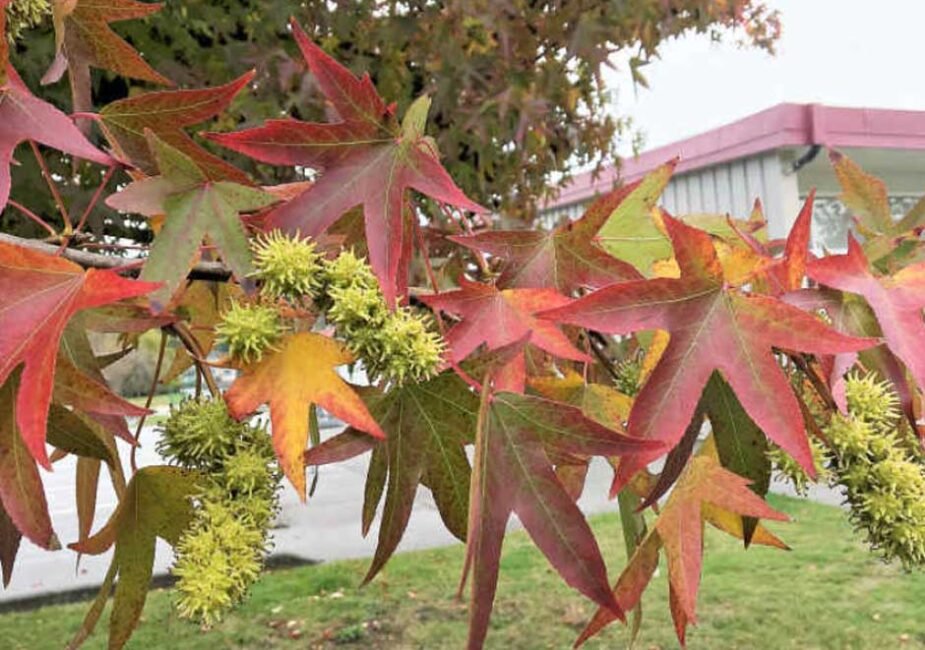
The Sweetgum is instantly recognizable by its unique foliage. Its leaves are five-pointed and star-shaped, often leading to confusion with certain maple varieties.
These glossy leaves provide dense shade throughout the summer months. The bark of a mature tree is deeply furrowed, adding a rugged texture that contrasts beautifully with the tree’s overall symmetrical, egg-shaped crown.
The Sweetgum’s Native Domain and Impressive Stature
Range and Habitat
The American Sweetgum is a native species to the warm temperate regions of eastern North America, extending down into the tropical montane areas of Mexico and Central America.
It thrives in moist, nutrient-rich soils, commonly found in wet woods, along streambanks, and in low swampy bottomlands. Its adaptability has made it one of the most valuable forest trees in the southeastern United States.
Growth and Longevity
This is not a tree for a small garden; it is built for the long haul. In cultivation, it typically reaches heights of 50 to 70 feet, but in the wild, it can soar up to 150 feet.
With a trunk that can grow up to three feet in diameter, the Sweetgum is a substantial presence. Remarkably, these trees are known for their longevity, with some specimens living for up to 400 years.
Cultivation and Care: Bringing the Amber Glow to Your Landscape
Ideal Growing Conditions
For those looking to cultivate this majestic species, the Sweetgum prefers consistently moist soil, though it should not be soggy. While it can tolerate harsh winters, it flourishes best when given plenty of space to grow.
It is considered a relatively low-maintenance tree, especially if a non-fruiting cultivar like ‘Rotundiloba’ is chosen. Mulching around the base can help retain the necessary soil moisture.
Seasonal Splendor: The Fall Color Show
Perhaps the most celebrated feature of the liquid amber tree is its breathtaking autumn display. As the seasons change, its star-shaped leaves transform into a brilliant palette of colors.
Hues of deep red, fiery orange, and vibrant purple blend together, creating a stunning visual spectacle that makes the Sweetgum a favorite ornamental tree in temperate climates. This seasonal transformation is truly a highlight of the landscape.
Beyond Ornamentation: The Historical and Modern Uses
The Valuable Wood: From Furniture to Flooring
Beyond its aesthetic appeal, the Sweetgum is an economically important tree. Its wood, often referred to commercially as satin walnut, is a key material in the lumber industry.
The heartwood is a reddish-brown with a fine grain, making it suitable for furniture, interior trim, and flooring. It is also widely used for veneer and plywood, and even for crafting chopsticks for the East Asian market.
The Fragrant Resin and Medicinal Past
The tree’s resin, the original “liquid amber,” has a history of practical use. It was once used to make chewing gum and was historically exported as a native balsam.
Furthermore, the Sweetgum has a place in traditional medicine. Extracts have been used in Chinese medicine to treat various ailments, including coughs, diarrhea, and skin sores. The seeds are also being explored as a renewable source of shikimic acid.
The Infamous “Gumballs”: Managing the Sweetgum’s Drawback
Despite its many virtues, the Sweetgum has one notorious characteristic that frustrates many homeowners: its fruit. The tree produces hard, spiky, burr-like seed capsules, commonly nicknamed “gumballs.”
These gumballs drop in large numbers, creating a significant cleanup chore and a potential tripping hazard. This is the primary reason why non-fruiting cultivars are often recommended for urban and suburban plantings.
Conclusion: A Legacy of Beauty and Utility
The liquid amber tree is a species of remarkable duality. It offers unparalleled autumn beauty and valuable timber, while simultaneously presenting a challenge with its persistent, spiky fruit.
From its fragrant, historical resin to its modern role in the lumber industry, the American Sweetgum has secured its place in both the forest and the cultivated landscape. It remains a majestic and enduring presence, a true gem of the North American flora.