

Washington Hawthorn (Crataegus phaenopyrum): A Comprehensive Guide to Planting, Care, and Landscape Use

Discovering the Washington Hawthorn (Crataegus phaenopyrum)
Have you ever wondered what tree offers four seasons of visual interest, thrives in urban settings, and provides a safe haven for wildlife?
The Washington Hawthorn (Crataegus phaenopyrum) is a deciduous tree that consistently answers this call, making it a favorite among landscape designers and homeowners alike.
Native to the eastern and central United States, this small to medium-sized tree is celebrated for its attractive foliage, fragrant white flowers, and most notably, its persistent, brilliant red berries.
It is a resilient member of the Roseaceae family, often growing to a height of 25 to 30 feet with a rounded crown, offering a perfect blend of beauty and hardiness.
Botanical Characteristics: From Leaf to Berry
The journey of the Washington Hawthorn through the seasons is a spectacle of changing textures and colors.
In spring, the tree unfurls its leaves, which are distinctive for their three to five lobes, resembling a maple leaf, and emerging with a reddish-purple tint before maturing to a glossy dark green.
The summer brings a profusion of small, white, five-petaled flowers, borne in flat-topped clusters, which emit a mild, sometimes pungent, fragrance that attracts numerous pollinators.
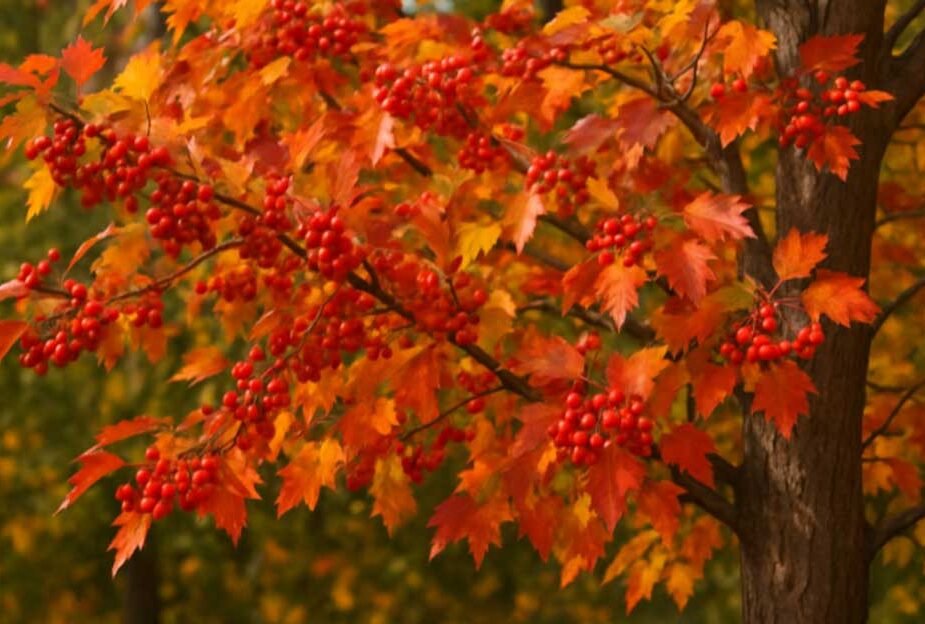
As autumn arrives, the foliage transforms into stunning shades of orange, scarlet, and purple, providing a dramatic contrast to the landscape.
The most enduring feature is the small, apple-like fruit, known as “haws,” which ripen to a vibrant red and often persist on the branches well into winter, offering a crucial food source for birds.
Ideal Growing Conditions for Washington Hawthorn
One of the tree’s greatest assets is its adaptability, allowing it to flourish in a wide range of environments.
It performs best when planted in full sun, meaning it should receive at least six hours of direct, unfiltered sunlight each day, which maximizes flowering and fruit production.
While it prefers well-drained soil, the Washington Hawthorn is remarkably tolerant of various soil types, including heavy clay, and can handle both slightly acidic and alkaline pH levels.
Once established, it exhibits good drought tolerance, though consistent watering during the first few growing seasons is essential for developing a strong root system.
Its tolerance for urban pollution and compacted soil makes it an excellent choice for street plantings and city parks where other trees might struggle.
Essential Care and Maintenance
Caring for this hawthorn is generally straightforward, contributing to its popularity as a low-maintenance ornamental tree.
Pruning is primarily needed to establish a strong central leader and a desirable shape when the tree is young, and to remove any dead, diseased, or crossing branches.
Due to the presence of long, sharp thorns—a characteristic that gives it the alternate name “Washington Thorn”—careful handling and protective gear are advised during any pruning activity.
Fertilization is rarely necessary unless a soil test indicates a specific nutrient deficiency, as the tree generally thrives without supplemental feeding.
It is important to note that the tree can produce suckers from the base, which should be promptly removed to maintain a tree-like form rather than a shrubby thicket.
The Washington Hawthorn in the Landscape
Beyond its seasonal beauty, the Washington Hawthorn serves several practical functions in the landscape.
Its moderate size makes it an excellent choice for smaller yards or beneath utility lines where a larger tree would be unsuitable.
When planted in a row, the tree’s dense, thorny nature makes it an effective and attractive security hedge or barrier, deterring unwanted foot traffic.
It is also a fantastic wildlife tree, providing shelter for nesting birds and a reliable food source throughout the cold months, enhancing the biodiversity of any garden.
Managing Pests and Diseases
While the Washington Hawthorn is generally considered one of the more disease-resistant hawthorns, it is not entirely immune to problems.
The most serious concern is **Fire Blight**, a bacterial disease that can cause blossoms and shoots to blacken and die back; prompt pruning of infected areas is the best defense.
Unlike many other hawthorns, it shows good resistance to **Cedar-Apple Rust**, a common fungal issue, which is a significant advantage for gardeners in affected regions.
Common pests to watch for include aphids, lace bugs, and scale, which can usually be managed with horticultural oils or insecticidal soaps if infestations become severe.
Regular inspection and maintaining the tree’s overall health through proper watering and site selection are the best preventative measures against most issues.
Frequently Asked Questions (FAQ)
Is the Washington hawthorn a good tree for my yard?
Yes, it is highly valued as an ornamental tree due to its four seasons of interest: attractive spring foliage, white summer flowers, brilliant fall color, and persistent red berries in winter. It is also quite tolerant of urban conditions.
Are Washington hawthorn berries edible?
The berries (haws) are technically edible but are often described as mealy and are not typically consumed by humans. They are a vital food source for birds and other wildlife, especially during the winter months.
Does the Washington hawthorn have thorns?
Yes, the Washington hawthorn is known for its long, straight thorns, which is why it is sometimes used as a security hedge or barrier plant.
Is the Washington hawthorn resistant to cedar-apple rust?
The Washington hawthorn is considered one of the most resistant hawthorn species to cedar-apple rust, a common fungal disease that affects many other hawthorns.